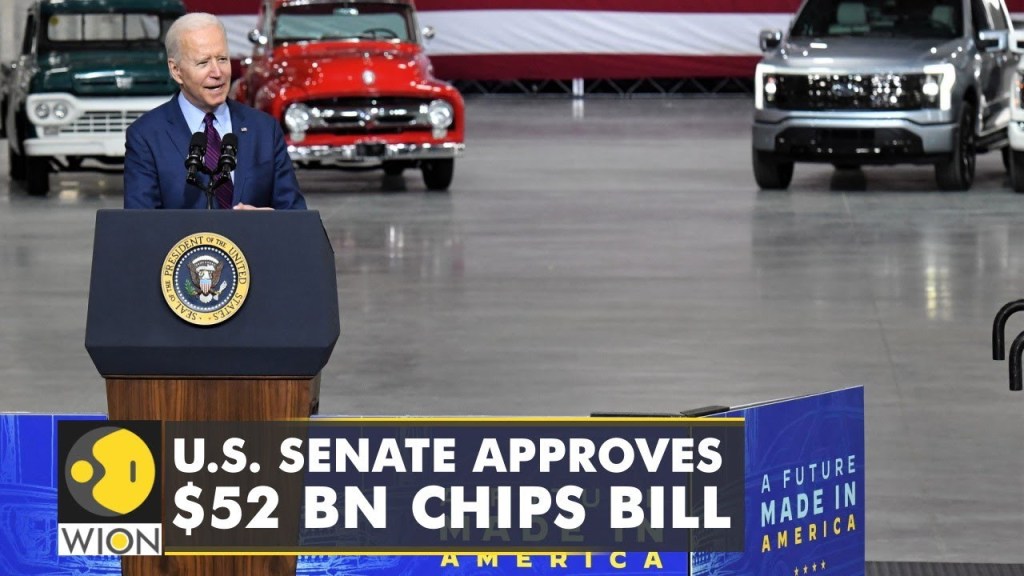
The bill subsidizing domestic semiconductor production cleared its first procedural hurdle Tuesday in a 64-34 vote.
The US Senate appears likely to pass legislation that would deliver billions of dollars of federal funding to the American semiconductor industry, a top priority in the Biden administration’s continuing efforts to out-compete China, after a preliminary vote on Tuesday.
The Senate’s procedural vote passed 64 to 34, but the legislation will still require additional voting rounds before final passage in the chamber.
If the bill ultimately passes both chambers of Congress and becomes law, the legislation would provide about $52 billion to the semiconductor industry, which produces the microchips essential to everything from weapons to household goods to video games to cars.
“Advancing this bill is crucial for lowering costs, solving our nation’s chip shortage and making sure America remains competitive in the 21st century,” Senate Majority Leader Chuck Schumer, a New York Democrat, said moments before voting, referring to the vote as a “test”.
“America will fall behind in so many areas if we don’t pass this bill, and we could very well lose our ranking as the number one economy and innovator in the world if we can’t pass this.”
For more than a year, the semiconductor funding has been at the heart of sprawling legislation meant to boost Washington over Beijing in the quest for a greater share of global chip production.
The Senate passed its own version of that broader competition bill, which touched on nearly every aspect of the US-China rivalry and drew substantial bipartisan support last June.
In February, Democrats in the House of Representatives passed their own version of the competition legislation, but did so on what was essentially a party-line vote.
Since the spring, the two chambers of Congress have been engaged in a rare bipartisan, bicameral negotiation process to try and resolve their differences and produce a compromise version of the bill that can attract enough votes to become law.
But the negotiations have become entwined in other policy debates and political divisions in Congress.

 Political | Process
Leave a comment