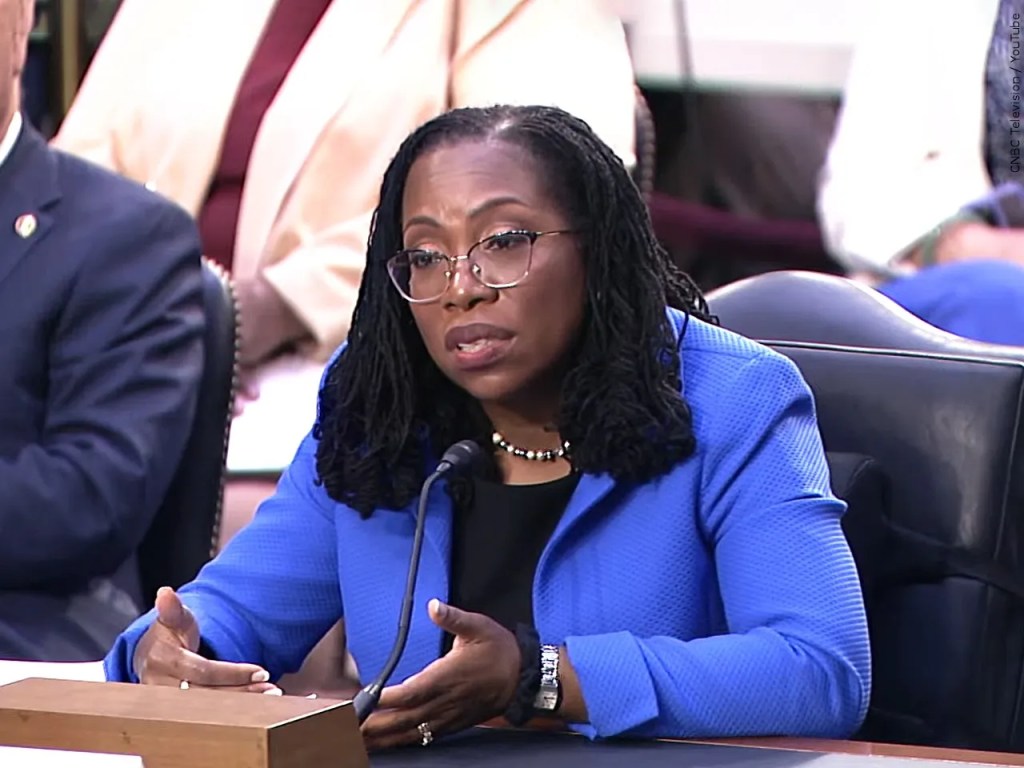
President Joe Biden announced that he will nominate Ketanji Brown Jackson to the Supreme Court.
In the 2017 decision, Jackson refused to certify a proposed class of more than 5,500 current and former Black employees at Lockheed. Jackson ruled that the proposed class didn’t satisfy the requirement for commonality because the members of the proposed class had varying experiences of discrimination.
Jackson also said the proposed $22.8 million settlement wasn’t fair and adequate because Black employees who didn’t opt out would be required to release all legal claims against Lockheed without knowing the amount that they would receive in return.
Individuals who remained in the case but didn’t fill out a claim form wouldn’t receive any settlement money while also giving up their right to sue for discrimination.
Criticizing that decision, retired District Judge U.W. Clemon of Alabama said in a letter to Biden that Jackson’s decisions in the case are “a bell sounding the alarm that if Judge Jackson is appointed to the Supreme Court, simple justice and equality in the workplace will be sacrificed.” The case was Ross v. Lockheed Martin.
Clemon said Jackson not only “gave the ax to a settlement designed to benefit numerous Black workers,” she also refused to allow the Black workers to take discovery of Lockheed’s books and records to prove class action status. She also effectively denied the plaintiffs’ right to appeal by taking 54 days to issue her order denying class certification, Clemon said.
In their op-ed, Mack and Davis pointed out that Clemon is listed as of counsel to the law firm that sued on behalf of the workers. They also said Jackson had a duty to protect the interests of Black workers who would be bound by the settlement.
Does the decision indicate that Jackson is biased? Mack and Davis don’t think so.
“At worst, Jackson seems to have been protecting one group of Black Lockheed employees from having their interests sacrificed for those of another group of Black employees,” Mack and Davis wrote.
“The history of African American federal judges, and of worries that they might be biased in discrimination cases, should lead one to be humble about drawing such broad conclusions, based on limited proof, about what a Black female justice is likely to do on the court.”

 Political | Process
Leave a comment