The ban will include Russian oil, liquefied natural gas, and coal, two sources told Bloomberg News, and could come as soon as Tuesday.
Tweet
- Joe Biden has faced mounting pressure from Congress as bipartisan members press for legislation targeting Russia’s vast energy markets amid Putin’s continued shelling of Ukrainian cities.
- The Biden administration and European allies had exempted Russian energy exports, fearing that penalties on the sector could drive record prices even higher.
- But prices have surged in recent days as refiners and traders feared the sanctions would come anyway.
- While a U.S. ban is viewed as largely symbolic, it could prompt worries of new sanctions targeting other key Russian commodity exports.
- Europe, which is heavily dependent on Russian gas, is not expected to join the ban, with German Chancellor Olaf Scholz saying in a statement Monday that “Europe has deliberately exempted energy supplies from Russia from sanctions.”
- “At the moment, Europe’s supply of energy for heat generation, mobility, power supply and industry cannot be secured in any other way,” Scholz said. “It is therefore of essential importance for the provision of public services and the daily lives of our citizens.”
- The U.S. ban will include Russian oil, liquefied natural gas and coal, according to two people, who spoke on condition of anonymity.
- The decision was made in consultation with European allies, who rely more heavily than the U.S. on Russian energy, another person said.
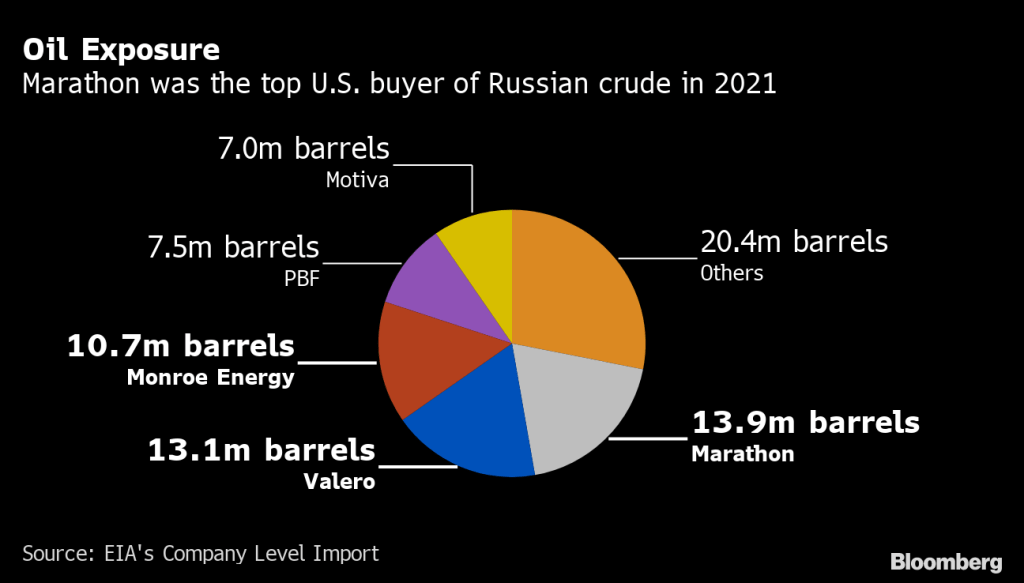
- The U.S. is a smaller buyer than Europe and the bigger risk to prices rallying lies in coordinated action between U.S. and Europe. Russian oil made up about 3% of all the crude shipments that arrived in the U.S. last year and imports of Russian oil and petroleum products represented about 8% of the U.S. total.

 Political | Process
Leave a comment